Hummingbird Alley
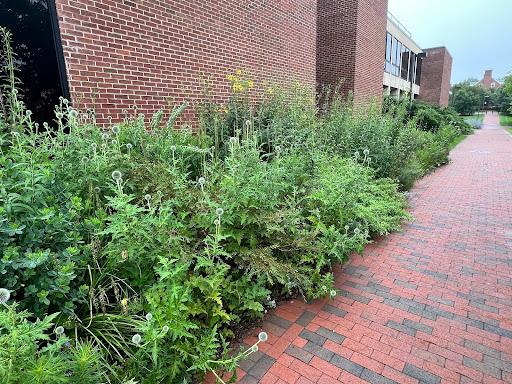
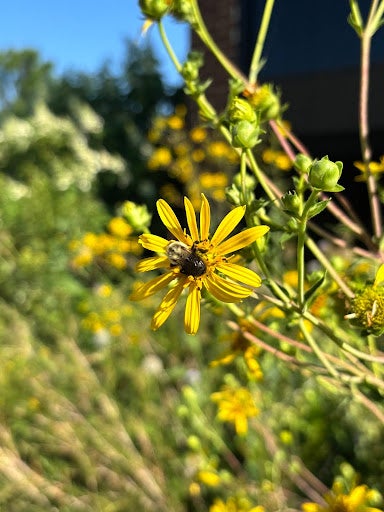
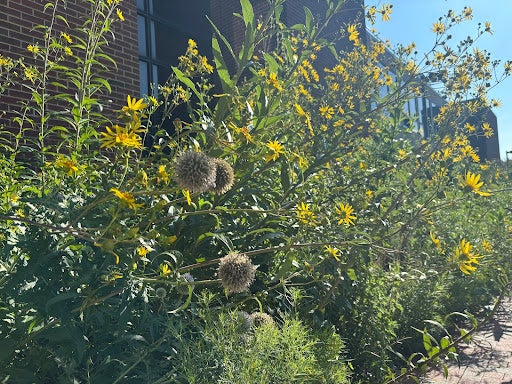 Between the Architecture Building and the north side of the Robert H. Smith School of Business lies Hummingbird Alley. Take a stroll through here between classes, and you will find globe thistle (Echinops tianschanicus), false indigo (Baptisia australis), false sunflower (Heliopsis helianthoides), california fuchsia (Epilobium canum), woodland sage (Salvia nemarosa), bee balm (Monarda fistulosa), panicled hydrangea (Hydrangea paniculata), and ironweed (Vernonia noveboracensis). The Mohr’s Rosinweed (Silphium mohrii) is what specifically attracts our pollinators. It is native to the southeastern United States and is considered to be vulnerable to extinction. Mohr’s Rosinweed is our second longest blooming Rosinweed after Simpson’s Rosinweed (Silphium simpsoni), which can also be found within Hummingbird Alley. We have about 14 native US Rosinweed species within this alley. The name hummingbird alley stems from the fact that while this garden is planted with many species known to support our native insect population, we also receive many winged visitors in the form of ruby-throated hummingbirds! These hummingbirds are very valuable to our campus as this is the only breeding hummingbird around in the eastern part of the United States. The eastern part of the United States is considered their breeding grounds before they migrate south. This garden is essential to best support and accommodate our winged friends that stop by!
Photos by Sam Bahr